



Quilt Manufacturer Vetting Steps for Your Own Label Line
Nov
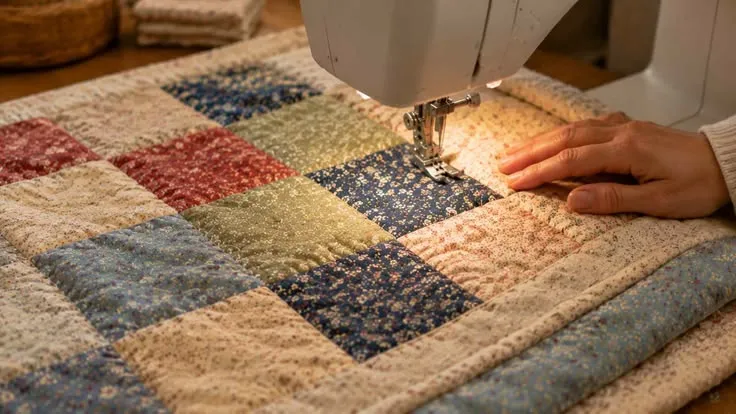
An own-label quilt line puts your brand on someone else’s stitching. Picking a quilt manufacturer from a catalogue photo and a friendly sales email works until the first reorder arrives with shorter quilts, looser stitches or your label sewn on upside down. By then your customers have seen it, and the fault is yours in their eyes.
Vetting takes a few weeks and a little money, and it costs far less than a failed season. This guide walks through the checks in the order you would run them, from the first proof you ask for to the moment you sign a sample and place a trial order. It is written for brands and retailers launching quilts, throws or quilted bedding under their own name.
What an Own-Label Line Needs from a Quilt Manufacturer
Buying finished stock and running your own label are different jobs. For stock, the maker only has to repeat a product it already sells. For your own label, the maker has to follow your specification, sew in your labels, keep your designs private and hit the same measurements on the tenth reorder as on the first. Every check below tests one of those four promises.
Ask for Proof of Quilting Capability
Find out who does each stage
Ask the maker to describe the route of one quilt: cutting, piecing, quilting, binding, finishing, inspection and packing. Then ask who does each stage and where. Some makers do everything under one roof, some send hand-quilting to village groups and some buy finished tops from other workshops. None of these is wrong, but you need to know which one you are buying from, because each stage handed to someone else is one more place where your quality can drift.
Ask for evidence you can check
Request the business registration, an export record such as a recent bill of lading with the buyer’s name blacked out, and two or three quilts the maker has already produced in a similar style. Ask for a short video of work in progress with a sheet of paper showing your company name and the day’s date, which proves the footage is current. A reference from an existing own-label customer is worth more than any certificate on a website.
Match capacity to your line
A hand-quilted king-size quilt can take days of work by one person, so capacity depends on how many quilters the maker can call on, not on floor space. Ask for monthly capacity in your type of quilt, the share already booked in your season and what happens to your order if a larger customer arrives. A quilt manufacturer that answers with numbers is planning; one that answers with “no problem” is guessing.
Audit the Workshop in Person or by Video
What to look at on the floor
Start at the cutting table. Accurate patchwork starts with accurate cutting and a steady seam allowance, usually 1/4 inch or about 6 mm, so ask how the maker keeps it constant across workers. Look at pressed seams, matched points where blocks meet, the evenness of quilting stitches and the corners of the binding. Check that fabric is stored off the floor with lot labels, that the inspection table has good light and that there is a written defect log rather than a supervisor’s memory. Buyers who visit us, for example, can see both our Hanoi workshop and the villages where the hand-quilting is done, as our artisan villages page describes.
How to run a video audit
If you cannot travel, book a live video call rather than accepting edited clips. Ask the person holding the phone to walk without cuts from cutting to packing, to measure a finished quilt on camera with a tape and to open the defect log at the inspection table. Ask to see the fabric store and the shade-lot records for a current order. Forty-five minutes of unedited video shows more than a polished company profile.
Run Sample Rounds Until One Can Be Signed
Proto, size set and pre-production samples
The first proto sample checks the pattern, colours and hand feel. Expect at least one revision. A size set follows if you sell more than one size, because grading a quilt pattern is where measurements slip. The last round is the pre-production sample, made from bulk fabric, bulk batting and your real labels under normal working conditions. If you want to test stitch quality cheaply before committing to full-size quilts, ask for a small quilted piece first, such as a cushion or a clutch like our CURVE quilted clutch.
Measure, wash and handle every sample
Measure each sample against the specification, then wash it the way the care label will tell your customers to. Look for shrinkage, colour bleeding from dark patches and batting that shifts or lumps. Every batting has a maximum distance between quilting lines set by the company that makes it, and a quilt stitched wider than that will move after a few washes. Check that the maker has read the batting maker’s guidance and quilted inside it.
Seal the approved sample
When a pre-production sample passes, both sides sign and date its tag, and each keeps one. Record the fabric codes, batting, thread colour, stitch length and finished size on a sample card. That sealed sample becomes the quality contract for the order, and the inspector will compare bulk production against it.
Set Quality Control and AQL Before Bulk Production
Agree how quality will be judged before production starts, not when cartons are packed. Most own-label buyers use acceptance sampling from the ISO 2859-1 tables, at general inspection level II, with an AQL of 2.5 for major defects and 4.0 for minor ones. Critical defects, such as a needle left in a quilt, should have zero tolerance.
The numbers are easier to agree once you see them. For an order of 500 quilts, level II calls for a random sample of 50 pieces. At AQL 2.5 the order passes with up to 3 major defects in those 50 and fails at 4. At AQL 4.0 it passes with up to 5 minor defects and fails at 6. An order of 1,000 quilts raises the sample to 80 pieces, and the order then passes with up to 5 major and 7 minor defects.
Quilt Manufacturer
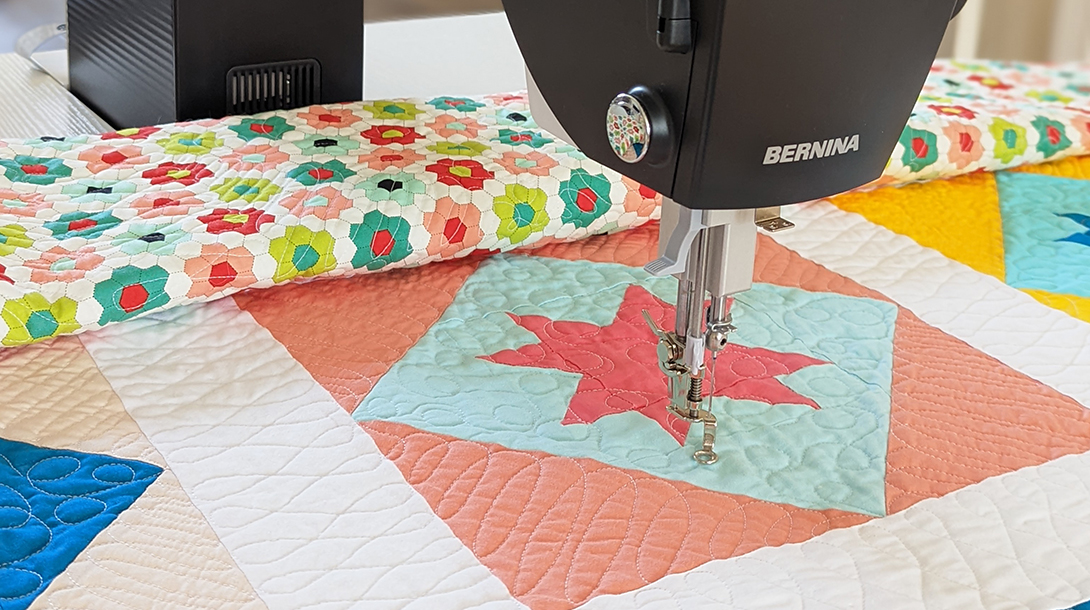
Write a defect list specific to quilts. Open seams, holes, stains that do not wash out, broken quilting lines, colour bleeding, a wrong or missing label and a size outside tolerance are usually major. Loose thread ends, slight puckering and small variations in hand-stitch length are usually minor. Hand-quilting is not machine-perfect, so add photos of acceptable and unacceptable stitching to the specification. Book a final inspection once at least 80% of the order is packed, and ask for an inline check partway through production on a first order.
Protect Your Label, Designs and Patterns
Sign an NDA before you send designs
Send nothing beyond a mood board until the maker has signed a non-disclosure agreement. Make it cover designs, patterns, templates, tech packs and your customer names, and make it enforceable in the maker’s country. Agree in writing that patterns, templates and quilting files made for your line belong to you, and that the maker will not sell your designs to anyone else.
Register your trademark early
A trademark protects you only in the countries where it is registered. Register your brand in your sales markets, and consider the country where the quilts are made, which makes it easier to act against copies and overruns there. The WIPO Madrid System lets you extend one application to many member countries instead of filing in each one separately.
Control labels and overruns
Decide who orders your woven labels, how many are issued and what happens to the leftovers. Ask for surplus labels and rejected quilts that carry your brand to be returned or destroyed, and ban the sale of overruns in the contract. Label minimums are often higher than quilt minimums, so check them early, for example against our custom logo and label options.
Test Communication Before You Commit
Sampling is the best trial of working together. Note how long replies take, whether one named person owns your account and whether the maker asks questions about your specification, which is a good sign. Watch how problems are reported. A quilt manufacturer that sends photos of a fault and two ways to fix it before shipping will save you more money than one with a lower price and silence. Agree a weekly update format during production, with photos, before you place the order.
Frequently Asked Questions About Vetting a Quilt Manufacturer
How many makers should I vet at the same time?
Two or three is enough. Send the same brief and the same sample request to each, compare the samples side by side and keep the runner-up informed in case your first choice cannot hold the quality on a reorder.
Is a video audit enough for a first order?
For a small trial order, a live video audit plus an independent final inspection is usually enough. For a line you plan to reorder every season, visit once, ideally while one of your own orders is on the floor.
What AQL should I use for quilts?
Many buyers use 2.5 for major defects and 4.0 for minor defects at general inspection level II, with zero critical defects. Handmade lines sometimes widen the minor limit for stitch variation, but write that into the specification rather than agreeing it at inspection.
Who owns the patterns and templates?
Whoever the contract says. Without a written clause, the maker may treat patterns, templates and quilting files as its own. Put ownership in the NDA or the supply agreement before sampling starts.
Our Recommendation for Vetting a Quilt Manufacturer
Run the checks in order and stop at the first one a maker cannot pass. Ask for proof, audit the floor, sign a pre-production sample, fix the AQL and protect your label before you pay a deposit. Then place a trial order of one or two styles and judge the reorder as hard as the first run. If you still need names to vet, start with our list of quilt manufacturers supplying European retailers, and once you have chosen, our guide for importers planning bulk quilt orders covers sizes, landed cost, labelling and freight.
Build Your Own Label Quilt Line with Tomato Handmade
We are Tomato Handmade, a Vietnamese manufacturer of fine handcrafted textile crafts and decorations. We began as a quilting workshop, and today our own Hanoi facility handles product development, pattern-making, sampling, quilting, finishing, AQL 2.5 inspection and private-label application, with hand-quilting by registered artisans across nine northern communes.
We sign an NDA before sampling. Within two working days of your brief we send a feasibility note, an indicative price and a sampling date, and the first sample is revised until you sign it off. The signed sample is our quality contract. Your own design starts at 300 pieces per style, a woven label at 300 pieces and a maker card naming the artisan and village at 100 pieces. Our home textiles and bedding range includes quilted bedspreads.
Monthly capacity across our crafts is 18,000 pieces. Every order ships with an AQL 2.5 inspection and a pre-shipment photo report, and buyers visiting Vietnam are welcome at our Hanoi workshop and in the villages. Send us your own-label brief with a sketch, a photo or a tech pack to start.
You May Also Be Interested In
Hemp Bags Wholesale Guide to Fabric, Minimum Orders and Supplier Choice
Nov
Top Hemp Fiber Suppliers for Export-Grade Textile Production
Nov
Quilt Manufacturer Vetting Steps for Your Own Label Line
Nov
Hemp Material Suppliers Ranked for OEM Textile Brands
Nov
Top 5 Hemp Bags Manufacturers Compared for Private Label Orders
Nov
Hemp Fabric Supplier Checklist for Export Bulk Orders
Nov
Top Hemp Fiber Suppliers for Export-Grade Textile Production
Nov
Top 5 Hemp Bags Manufacturers Compared for Private Label Orders
Nov
Hemp Material Suppliers Ranked for OEM Textile Brands
Nov